
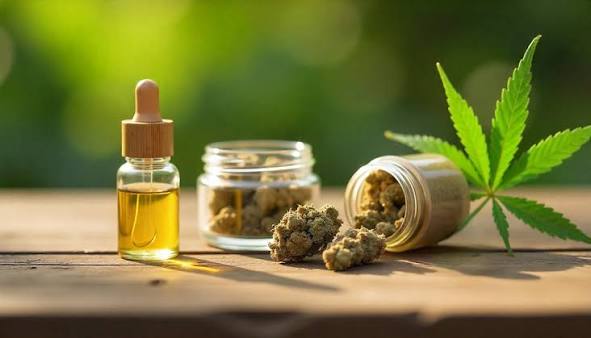
Modern life can be busy and stressful. Work, responsibilities, screen time, poor sleep routines, and everyday pressures can make it difficult to slow down and relax. As a result, many people are exploring different wellness approaches, including CBD oil for relaxation.
CBD, short for cannabidiol, is a naturally occurring cannabinoid found in cannabis and hemp plants. Unlike THC, CBD is not generally associated with the intoxicating “high” produced by THC.
But does CBD oil actually help you relax? And what does scientific research say about CBD, stress, anxiety, and relaxation?
The answer is more complicated than many product claims suggest. Some human studies have found that CBD may influence anxiety-related responses, while other studies have found little or no significant effect. Recent reviews also point out that the available evidence is still limited and varies considerably between studies.
In this article, we’ll look at what researchers currently know about CBD oil and relaxation, how CBD may interact with the body, what the research says about anxiety and stress, and what to consider before using CBD products.
What Is CBD Oil?
CBD oil is a product containing cannabidiol (CBD), usually combined with a carrier oil. Depending on the product, it may contain CBD isolate, broad-spectrum CBD, or full-spectrum hemp extract.
CBD is one of many cannabinoids naturally produced by cannabis plants.
Unlike THC, CBD does not typically produce the same intoxicating effects associated with cannabis containing significant amounts of THC. This is one reason CBD has attracted interest as a potential wellness ingredient.
CBD products can come in several forms, including:
- CBD oil and tinctures
- CBD capsules
- CBD gummies
- CBD creams and topical products
- CBD beverages
- Other CBD-infused products
The concentration and composition of these products can vary significantly, so the term “CBD oil” does not necessarily describe one standardized product.
Why Are People Interested in CBD for Relaxation?
People commonly explore CBD products because they are interested in managing everyday stress or supporting a sense of calm.
Research has particularly focused on the potential relationship between CBD and anxiety-related symptoms. Some controlled human studies have reported reduced subjective anxiety under specific experimental conditions, while others have not found a meaningful difference compared with placebo.
This distinction is important.
Relaxation and anxiety are related, but they are not exactly the same thing.
A person may feel tense after a demanding day without having an anxiety disorder. Similarly, someone may experience clinically significant anxiety that requires professional assessment and treatment.
Therefore, research about CBD and anxiety should not automatically be interpreted as proof that CBD oil promotes general relaxation.
What Does the Research Say About CBD and Relaxation?
The research on CBD and relaxation is still developing.
A recent review examining CBD in foods and supplements specifically noted that there is currently a lack of direct evidence showing that CBD produces or maintains “relaxation” beyond placebo effects.
This is an important finding because many CBD products are marketed using words such as “calm,” “relax,” or “stress relief.”
At the same time, researchers have investigated whether CBD may affect anxiety responses. A systematic review of randomized controlled trials found that results were mixed, although some studies suggested that CBD could reduce anxiety compared with placebo. The researchers also emphasized differences in study design, dosage, and duration and called for better-quality trials.
A 2024 systematic review and meta-analysis similarly reported a potentially beneficial effect on anxiety symptoms but emphasized that the available clinical samples were limited and that more high-quality trials are needed.
So, the current evidence can be described as promising but inconclusive, particularly when discussing general relaxation.
CBD and Anxiety: What Researchers Have Found
Anxiety is one of the areas where CBD has received considerable scientific attention.
Researchers have used different methods to investigate CBD, including simulated public-speaking tests, laboratory stress tasks, clinical studies, and brain-imaging research.
Some experiments have found that CBD may reduce subjective anxiety during stressful situations. For example, previous controlled studies have reported lower anxiety ratings after certain doses of CBD during simulated public speaking. However, other experiments have not found significant differences between CBD and placebo.
A systematic review of randomized controlled trials also found considerable variation between studies, including differences in CBD dosage and the anxiety conditions being studied.
This means you should be cautious about statements such as “CBD definitely reduces anxiety.”
The evidence does not currently support such a broad conclusion.
Does CBD Make You Feel Calm?
Some people report feeling calmer after using CBD, but individual experiences can vary.
There are several possible reasons for this variation.
Individual Differences
People can respond differently to the same substance. Factors such as body composition, metabolism, previous exposure to cannabinoids, and individual sensitivity can affect the experience.
Product Differences
CBD oils are not all identical. Products can differ in:
- CBD concentration
- Other cannabinoids
- Terpene content
- Carrier oils
- Extraction methods
- Product quality
- Presence or absence of THC
As a result, experiences with one CBD product cannot necessarily be generalized to every CBD oil.
Expectations and Placebo Effects
Expectations can also influence how people perceive wellness products.
If someone expects a CBD product to make them feel relaxed, that expectation may influence their subjective experience. This is one reason controlled trials compare CBD with placebo.
How Might CBD Influence Stress and Anxiety?
Researchers are still investigating the mechanisms behind CBD’s possible effects.
CBD interacts with several biological systems rather than acting like a simple traditional receptor agonist. Researchers have investigated its relationship with the endocannabinoid system and other signaling pathways, including serotonin-related mechanisms.
The endocannabinoid system is involved in several physiological processes, including mood, stress responses, sleep, appetite, and pain perception.
However, understanding a biological mechanism does not automatically prove that a CBD oil product will produce a particular benefit in everyday life.
Clinical evidence is still necessary to establish whether a specific effect is meaningful and consistent.
CBD and the Endocannabinoid System
The endocannabinoid system (ECS) is a complex signaling network found throughout the body.
It includes:
- Endocannabinoids produced naturally by the body
- Cannabinoid receptors
- Enzymes involved in producing and breaking down endocannabinoids
The ECS is involved in regulating several biological processes.
Because CBD interacts with the body’s cannabinoid-related signaling systems, scientists have investigated whether it could influence processes associated with stress and emotional regulation.
However, CBD does not simply “activate the endocannabinoid system” in the same way that THC interacts with cannabinoid receptors. Its pharmacology is more complex.
Does CBD Oil Help With Everyday Stress?
This is an area where marketing claims often go beyond the available evidence.
Some people use CBD oil as part of a broader wellness routine when dealing with everyday stress. However, there is not enough strong evidence to say that CBD oil reliably reduces ordinary stress in everyone.
Research has primarily focused on anxiety-related outcomes rather than the broad concept of everyday relaxation.
Therefore, CBD should not be viewed as a guaranteed solution for work stress, lifestyle pressures, or emotional challenges.
Simple strategies such as regular physical activity, adequate sleep, relaxation techniques, healthy social connections, and appropriate professional support can also play important roles in managing stress.
CBD Oil and Sleep: Is There a Connection?
Relaxation and sleep are closely connected, which is why CBD is also frequently discussed in relation to sleep.
However, the relationship between CBD and sleep is not straightforward.
If someone experiences difficulty sleeping because of stress or anxiety, changes in those underlying factors could potentially influence sleep. But this does not mean CBD is a proven sleep treatment.
The evidence surrounding cannabinoids and sleep continues to develop, and more well-controlled research is needed to determine when CBD may be useful and for whom.
Does More CBD Mean More Relaxation?
Not necessarily.
One of the important lessons from CBD research is that effects do not always increase in a simple linear way as the dose increases.
Some experimental studies have reported effects at certain doses but not at lower or higher doses. Earlier research on CBD and anxiety, for example, has observed differences between doses in simulated public-speaking experiments.
This is one reason consumers should avoid assuming that taking more CBD will automatically produce greater relaxation.
CBD products can also vary considerably in concentration, so comparing products based only on bottle size can be misleading.
What About Full-Spectrum, Broad-Spectrum, and CBD Isolate?
CBD products are commonly divided into three broad categories.
1. Full-Spectrum CBD
Full-spectrum products contain CBD along with other naturally occurring compounds from the hemp plant. Depending on the product and applicable regulations, they may contain small amounts of THC.
2. Broad-Spectrum CBD
Broad-spectrum products contain multiple hemp compounds but are generally formulated to remove or minimize THC.
3. CBD Isolate
CBD isolate is a purified form of cannabidiol without the other major naturally occurring hemp compounds.
These product categories can differ in chemical composition, but there is not enough evidence to claim that one type is universally better for relaxation.
What Should You Look for in CBD Oil?
If CBD products are legal where you live and you decide to explore them, product quality is an important consideration.
1. Check the CBD Concentration
Look at the amount of CBD in the entire bottle and, where provided, the amount per serving.
2. Look for Independent Testing
Third-party laboratory testing can provide information about the cannabinoid content and whether the product contains contaminants or unexpected ingredients.
3. Check the Ingredient List
Look for information about the carrier oil and other ingredients.
4. Understand the THC Content
Some CBD products may contain THC. If avoiding THC is important to you, check the product’s laboratory testing and labeling carefully.
5. Avoid Unrealistic Claims
Be cautious about products claiming to cure anxiety, eliminate stress, or treat multiple medical conditions.
A product’s marketing language is not the same thing as clinical evidence.
Are There Side Effects of CBD?
CBD is often described as well tolerated in research, but it is not completely free of potential adverse effects.
Possible effects can include:
- Drowsiness or sleepiness
- Changes in appetite
- Diarrhea or other digestive symptoms
- Changes in alertness
- Interactions with certain medications
CBD can also affect how some medicines are metabolized.
If you take prescription medication, have an ongoing health condition, are pregnant or breastfeeding, or are considering CBD for a specific medical problem, speak with a qualified healthcare professional before using it.
Is CBD Oil a Treatment for Anxiety?
CBD should not automatically be considered a replacement for established anxiety treatments.
Some research suggests CBD may have potential for anxiety-related symptoms, but the evidence remains limited and inconsistent. A recent systematic review of brain-imaging studies found substantial variation between studies and rated the overall certainty of evidence as low to very low.
If anxiety is persistent, severe, or interfering with daily life, professional evaluation is more appropriate than relying on a CBD product alone.
CBD Oil and Relaxation: What the Research Really Tells Us
When the evidence is separated from marketing claims, the picture becomes clearer.
Research suggests that CBD may influence anxiety-related responses in some circumstances, but studies have produced mixed results. Some systematic reviews report promising findings, while newer reviews continue to highlight methodological limitations and low certainty.
More importantly, direct evidence that CBD itself reliably produces general relaxation remains limited.
This means it is reasonable to say that CBD is an interesting area of research, but it is premature to describe CBD oil as a proven relaxation solution.
Also Read: CBD Oil and Exercise Recovery: Can They Work Together?
Final Thoughts
The relationship between CBD oil and relaxation is an interesting area of research, but it is important to distinguish scientific evidence from marketing claims.
Studies suggest that CBD may have effects on anxiety-related responses under certain conditions. However, results have not been consistent across all studies, and researchers continue to call for larger, better-designed clinical trials.
At present, there is limited direct evidence that CBD reliably creates or maintains general relaxation.
If you’re considering CBD oil as part of a wellness routine, focus on product quality, understand the cannabinoid content, avoid unrealistic health claims, and consider potential medication interactions. Most importantly, CBD should not replace professional care when persistent stress or anxiety is affecting your daily life.
Disclaimer: This article is for general educational purposes and does not provide medical advice. CBD laws and regulations vary by location. Always check applicable local regulations and speak with a qualified healthcare professional before using CBD for a health condition or alongside medication.